Google Pixel vs iPhone 17 Pro Max: Which Is Better?
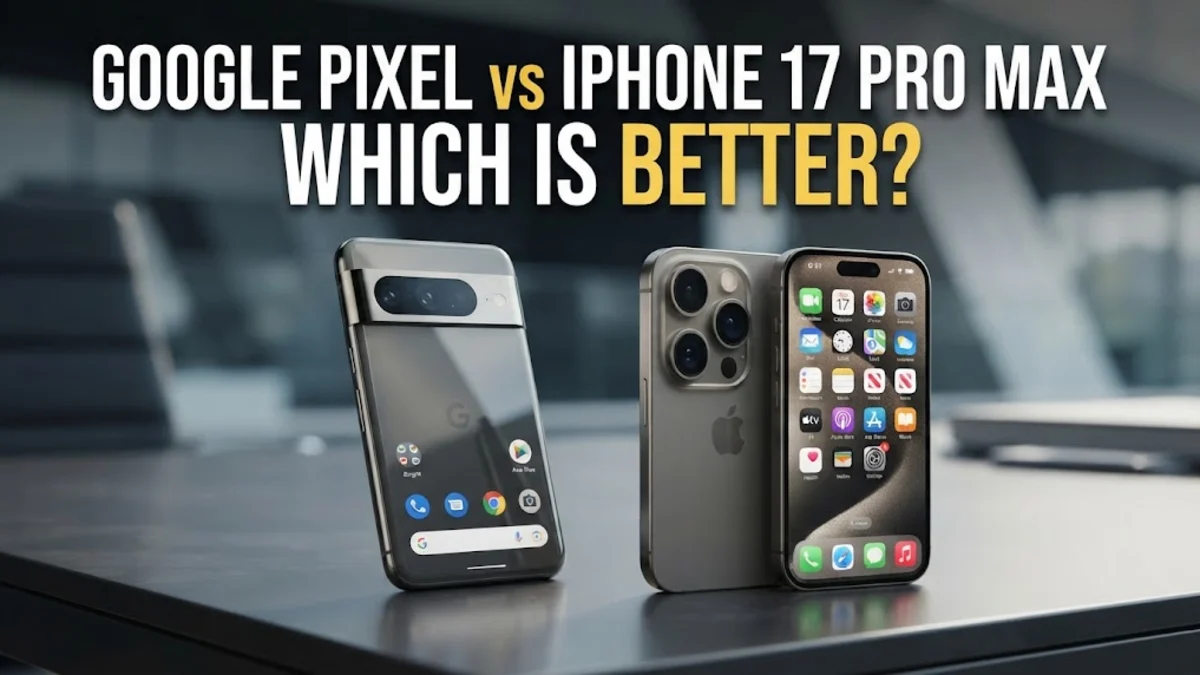
Choosing between the top-tier Android experience and the peak of the iOS ecosystem has never been more difficult than in 2026. As the Google Pixel 11 Pro XL goes head-to-head with the iPhone 17 Pro Max, the decision no longer rests solely on hardware specifications like RAM or megapixel counts. Instead, the choice hinges on how you use artificial intelligence, your preference for computational versus natural photography, and which ecosystem’s smart home integration fits your daily lifestyle. This comparison breaks down the performance, camera capabilities, and software innovations that define these two flagship devices. If you are looking for the absolute best mobile technology available today, both devices represent the pinnacle of their respective platforms. The iPhone 17 Pro Max continues to dominate in raw power and video consistency, while the Google Pixel leverages the Tensor G6 chip to provide a more predictive and helpful user experience. Understanding the subtle differences in their display technology and battery management is essential before making a thousand-dollar investment.
Processing Power and Performance Benchmarks
The heart of the iPhone 17 Pro Max is the A19 Pro chip, a 2nm powerhouse that continues Apple’s tradition of industry-leading performance. In 2026, this processor allows for seamless multitasking, enabling users to run desktop-class applications and AAA gaming titles without noticeable heat buildup. The A19 Pro focuses on sustained performance, meaning it won't throttle during long sessions of 4K video editing or high-refresh-rate gaming. This hardware advantage is paired with iOS 19’s efficient memory management, making the device feel incredibly responsive even when dozens of apps are open in the background. Google’s Pixel 11 Pro XL takes a different approach with the Tensor G6. While it may not match the iPhone in synthetic benchmarks like Geekbench, the Tensor G6 is specifically designed for Google’s unique AI workloads. It features a dedicated Neural Processing Unit (NPU) that handles on-device Gemini tasks, such as real-time audio transcription and live video translation, more efficiently than any other chip. However, for users who prioritize raw speed for gaming or heavy productivity, the iPhone remains the champion. Most daily tasks like social media, browsing, and messaging will feel identical on both, but the iPhone’s A19 Pro offers more overhead for future software updates over the next five to seven years.
Camera Systems and Computational Photography
Photography remains the biggest differentiator between these two titans. The iPhone 17 Pro Max features a triple 48MP array, but the real magic is in its video capabilities. Apple’s Log recording and ProRES support make it the preferred choice for content creators who need professional-grade footage that can be color-graded later. The new 48MP telephoto lens offers 5x optical zoom with improved low-light performance, ensuring that zoomed-in shots remain sharp and noise-free even at night. For those who prefer a 'what you see is what you get' approach, the iPhone’s consistent exposure and natural skin tones are hard to beat. The Google Pixel 11 Pro XL continues to lead in computational photography. Its 'Super Res Zoom' uses AI to clean up images taken at 30x magnification, producing usable shots where other phones see only digital noise. Google’s 'Magic Editor' has been updated in 2026 to include 'Auto-Reframe,' which can intelligently expand the borders of a photo by generating realistic backgrounds. While the Pixel’s video quality has caught up significantly, especially with 'Video Boost' processing in the cloud, it still lacks the instant, on-device fluidity of the iPhone’s cinematic mode. If you take more still photos of moving subjects or low-light landscapes, the Pixel is your best bet. For video and social media content, the iPhone is the superior tool.
Display Quality and Build Durability
Both phones offer stunning LTPO OLED displays with 120Hz refresh rates, but they excel in different areas. The iPhone 17 Pro Max features the Super Retina XDR display with a peak brightness of 3,000 nits, making it easily readable under the direct Australian or Texan sun. Apple has also refined the 'Dynamic Island,' making it smaller and more functional with third-party app integrations. The build is exceptionally durable, utilizing a Grade 5 Titanium frame that resists scratches and significantly reduces the weight compared to older stainless steel models. Google’s Pixel 11 Pro XL uses the 'Super Actua' display, which matches the iPhone in brightness and offers slightly better color accuracy for professional photo editing. The Pixel’s design is more ergonomic for some, with a rounded camera bar that prevents the phone from wobbling when placed on a table. In 2026, both devices use the latest iteration of Gorilla Glass Armor, providing excellent drop resistance. One minor difference is the screen-to-body ratio; Google has managed to shrink its bezels further this year, giving the Pixel a more futuristic, 'all-screen' look from the front. If you prefer a lighter phone that feels like a piece of jewelry, the Titanium iPhone wins. If you want a more comfortable, symmetrical design with a class-leading screen, the Pixel is the winner.
AI Integration and Software Experience
Battery Life and Charging Standards
Comparison Table and Verdict
| Feature | iPhone 17 Pro Max | Google Pixel 11 Pro XL |
|---|---|---|
| Processor | A19 Pro (2nm) | Tensor G6 (AI Optimized) |
| Main Camera | 48MP Triple Array | 50MP Triple Array |
| AI Assistant | Apple Intelligence (iOS 19) | Gemini (Android 17) |
| Build Material | Grade 5 Titanium | Recycled Aluminum |
| Charging Speed | 30W Wired / Qi2 | 45W Wired / Qi2 |
| Video Quality | ProRes / Log / Best-in-class | Video Boost / Cinematic Blur |
The bottom line
Ultimately, both the Google Pixel 11 Pro XL and the iPhone 17 Pro Max represent the best that 2026 has to offer. The gap between Android and iOS has narrowed significantly, with both platforms offering seven years of software support and incredible build quality. Your decision should come down to which AI assistant you prefer and whether you value video production over still-image magic. No matter which you choose, you are getting a device that will remain fast and capable for years to come.
Frequently asked questions
Which phone has better zoom capabilities?
The Google Pixel 11 Pro XL generally wins in zoom quality due to its 'Super Res Zoom' AI processing, which cleans up images even at high digital magnification levels. While the iPhone 17 Pro Max has a high-quality 5x optical zoom, it can't match the Pixel's clarity at 30x or 50x.
Is the iPhone 17 Pro Max better for gaming?
Yes, the A19 Pro chip in the iPhone 17 Pro Max has superior GPU performance compared to the Tensor G6. Most modern AAA mobile games are optimized for iOS first, providing higher frame rates and better thermal management during long gaming sessions.
Does the Google Pixel 11 Pro XL support satellite SOS?
Yes, like the iPhone, the Pixel 11 Pro XL includes advanced satellite connectivity for emergency services in 2026, allowing you to send messages and share your location even when you have no cellular or Wi-Fi signal.
Can I use MagSafe accessories with the Pixel 11?
In 2026, both phones support the Qi2 charging standard, which includes a magnetic ring similar to MagSafe. This means most magnetic chargers and wallets designed for the iPhone will now work perfectly with the Pixel 11 series.
Which phone is more repairable?
Google has made significant strides in repairability, offering official spare parts through various online stores and a modular internal design. While Apple has improved its 'Repair Assistant,' the Pixel is generally considered slightly easier for third-party technicians to service.