Samsung Galaxy vs iPhone: Which Should You Buy in 2026?
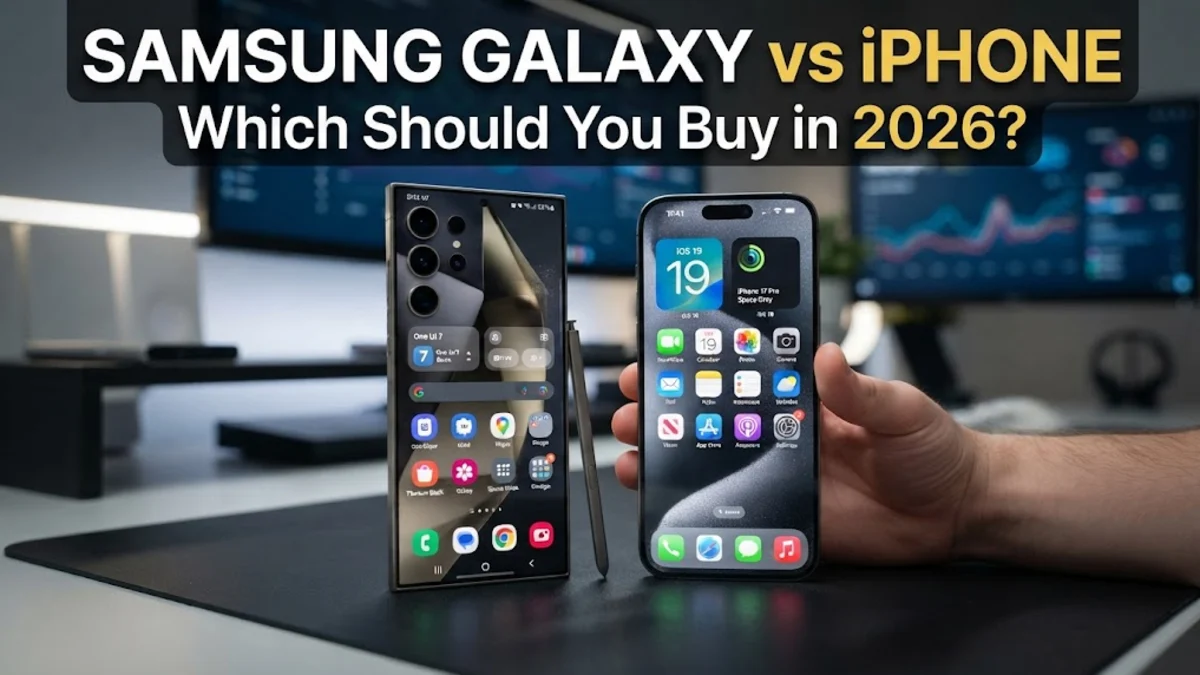
Choosing between a Samsung Galaxy and an iPhone in 2026 is no longer just about hardware specs; it is a choice between two distinct digital lifestyles. With the release of the Galaxy S26 series and the iPhone 18 lineup, both manufacturers have pushed mobile technology to its functional limits, focusing heavily on integrated artificial intelligence and sustainable build materials. Whether you are looking for the open flexibility of Android or the polished, tightly controlled environment of iOS, the gap in raw performance has narrowed significantly.
In 2026, the decision hinges on your specific needs: do you prioritize professional-grade zoom photography and multitasking, or do you value seamless integration with a specific suite of desktop and wearable hardware? This guide breaks down the critical differences in display tech, camera systems, and operating software to help you determine which flagship deserves your investment this year. We will examine the latest iterations of One UI and iOS to see how they handle modern demands like generative AI and high-end mobile gaming.
Hardware Design and Build Durability
The physical design of flagship phones in 2026 has reached a point of extreme refinement. Samsung’s Galaxy S26 Ultra continues to lead with its sharp, professional aesthetic, utilizing a new iteration of 'Armor Aluminum' and Gorilla Glass Armor that significantly reduces reflections. The device remains the choice for power users due to the integrated S Pen, which has seen latency improvements that make digital handwriting feel identical to paper. Samsung has also managed to further slim down the bezels, creating an almost entirely edge-to-edge viewing experience without the need for a prominent sensor housing.
Apple, on the other hand, has focused on the tactile experience and weight reduction with the iPhone 18 Pro series. By using a refined Grade 5 Titanium alloy, the iPhone feels remarkably light yet structurally superior to older steel models. The 'Action Button' has evolved into a more versatile haptic sensor that responds differently to pressure levels, allowing for more granular control over camera focus or app shortcuts. While Samsung leans into a futuristic, rectangular look, Apple maintains its iconic rounded corners and uniform symmetrical bezels, appealing to those who prefer a more ergonomic, classic smartphone feel. Both brands have reached IP68+ ratings, meaning they can survive submersion and dust at levels that were previously considered specialized for rugged devices.
Display Technology: AMOLED vs Super Retina XDR
In 2026, the display battle is fought in nits and refresh rates. Samsung’s M15 OLED panels, found in the Galaxy S26, offer a peak brightness that can reach 3,000 nits, making them the most legible screens in direct sunlight ever produced. Their 'Vision Booster' technology has been updated to adjust not just brightness, but color contrast on a pixel-by-pixel level depending on ambient light. For gamers and heavy scrollers, Samsung’s 1Hz to 144Hz adaptive refresh rate provides a fluidity that is difficult to match, particularly in high-intensity applications where every millisecond of input lag counts.
Apple’s Super Retina XDR display on the iPhone 18 Pro utilizes LTPO 3.0 technology to manage battery efficiency better than previous generations. While Apple generally caps its ProMotion refresh rate at 120Hz, its color calibration remains the industry standard for creators. If you do significant photo editing or video grading on your phone, the iPhone’s consistent color reproduction across different brightness levels is a major advantage. Furthermore, Apple’s 'Tandem OLED' technology, recently migrated from the iPad Pro line, ensures that the display remains incredibly bright without the risk of burn-in over long-term use. Samsung offers more punchy, vibrant 'saturated' colors by default, while Apple aims for a more natural, lifelike palette.
Camera Systems: Optical Zoom vs Computational Video
The camera remains the primary differentiator for most buyers. The Samsung Galaxy S26 Ultra is the undisputed king of versatile photography, featuring a 200MP main sensor and a dual-telephoto system that provides 3x and 10x optical zoom. In 2026, Samsung’s 'Space Zoom' has been enhanced by a dedicated AI NPU (Neural Processing Unit) that cleans up digital noise at 100x magnification, making it possible to take legible photos of distant landmarks or text that other phones simply cannot resolve. For the hobbyist photographer who wants every possible lens at their disposal, Samsung is the clear winner.
Apple has taken a different route, prioritizing video quality and 'Spatial' capture for its Vision Pro ecosystem. The iPhone 18 Pro features a triple 48MP sensor array that ensures consistent color and detail across all three lenses. Apple’s 'ProRes' video and 'Log' recording capabilities make it a legitimate tool for professional videographers. The transition between lenses while recording is still smoother on the iPhone than on the Galaxy. Additionally, Apple’s Portrait Mode has become nearly indistinguishable from a DSLR, thanks to advanced depth-mapping sensors. If your primary use case is social media video, FaceTime, or family memories, the iPhone’s ease of use and consistent output often outweigh Samsung’s raw zoom power.
Software and AI: One UI 8 vs iOS 19
Software in 2026 is defined by AI integration. Samsung’s One UI 8, based on Android 16, features 'Galaxy AI' which is deeply embedded into the system. You can use 'Circle to Search' for instant shopping, real-time voice translation during phone calls, and 'Generative Edit' to move or remove objects in photos with incredible accuracy. One UI also offers 'DeX Mode,' which allows you to plug your phone into a monitor and use it as a desktop computer, a feature Apple has yet to replicate. This makes the Galaxy a superior tool for productivity and file management.
Apple’s iOS 19 (and the early updates of iOS 20) focuses on 'Apple Intelligence.' Rather than offering a suite of separate tools, Apple’s AI works in the background to summarize emails, prioritize notifications, and create personalized 'Genmojis.' The integration is more subtle but arguably more intuitive for the average user. Siri has been completely overhauled to understand context across different apps, allowing you to ask, 'Send the photos from last night to Sarah,' without specifying which app to use. While iOS remains more restricted in terms of customization—you cannot move icons anywhere or change system fonts as easily as on Samsung—it offers a level of polish and app optimization that developers still prioritize over Android.
Ecosystem Synergy and Connectivity
When comparing Samsung Galaxy vs iPhone, you are also comparing the Galaxy Watch vs the Apple Watch, and the Galaxy Tab vs the iPad. Samsung’s ecosystem has become very cohesive; if you own a Galaxy Book laptop, you can move your mouse cursor and files seamlessly between your phone and computer using 'Multi Control.' The Galaxy Buds also feature auto-switching that works perfectly across Samsung devices. However, Samsung is more 'open,' meaning their devices often play better with Windows PCs and third-party accessories than Apple’s do.
Apple’s ecosystem, often called the 'Walled Garden,' is more restrictive but more powerful for those who stay within it. Features like 'AirDrop,' 'Handoff,' and 'Universal Control' are remarkably reliable. In 2026, the 'Shared iCloud Library' and 'Family Sharing' remain the gold standard for managing a household’s digital life. If you already own a Mac or an iPad, the friction of switching to a Samsung Galaxy can be high, as you would lose access to iMessage, FaceTime, and your synced Apple Keychain passwords. Samsung offers 'Smart Switch' to help mitigate this, but it cannot move your actual iMessage history or paid apps from the App Store.
Value, Support, and Longevity
In terms of longevity, both companies have made significant promises. Both Samsung and Apple now offer 7 years of guaranteed security patches and major OS updates for their flagship models. This means a phone purchased in 2026 will remain current until 2033. However, iPhones traditionally hold their resale value much better than Galaxy devices. If you plan to trade in your phone every two years, an iPhone will likely net you a higher return or a more substantial trade-in credit.
Samsung often counters this by offering aggressive pre-order deals, such as free storage upgrades or bundled earbuds, which can lower the initial cost of entry. Furthermore, Samsung’s 'Self-Repair' program, in partnership with various parts distributors, makes it slightly easier for tech-savvy users to replace their own screens or batteries compared to Apple’s more serialized parts. In the long run, the iPhone is often the 'cheaper' device when you consider the total cost of ownership after resale, while the Samsung Galaxy offers more immediate value through hardware perks and promotional pricing.
The bottom line
In 2026, the Samsung Galaxy vs iPhone debate is less about which phone is 'better' and more about which ecosystem fits your workflow. Choose the Samsung Galaxy S26 if you want the best possible zoom camera, a built-in stylus, and a desktop-like multitasking experience. Choose the iPhone 18 if you prioritize video quality, social media optimization, and a seamless connection with other Apple products. Both are top-tier devices that will easily last you the next half-decade.
Frequently asked questions
Can I use an Apple Watch with a Samsung Galaxy phone?
No, the Apple Watch is strictly limited to the iOS ecosystem and requires an iPhone for setup and syncing. If you switch to Samsung, you will need to switch to a Galaxy Watch or a third-party option like Garmin.
Does the Samsung Galaxy S26 support iMessage?
While Samsung supports RCS (Rich Communication Services) which allows for high-quality media sharing and read receipts with iPhones, it does not support iMessage. However, in 2026, most cross-platform messaging gaps have been bridged by Apple's adoption of the RCS Universal Profile.
Which phone has better battery life in 2026?
Generally, the iPhone 18 Pro Max tends to lead in standby time and video playback, while the Galaxy S26 Ultra performs better in active productivity and multitasking. Both easily last a full day of heavy use.
Is it easy to transfer my data from iPhone to Samsung?
Yes, Samsung's Smart Switch app allows you to transfer contacts, photos, messages, and even some device settings via a cable or Wi-Fi. Note that some app-specific data and paid subscriptions will not transfer automatically.
Which phone is better for gaming?
The Galaxy S26 is often preferred by gamers due to its larger vapor chamber cooling system and higher 144Hz refresh rate options. However, the iPhone often receives major game titles (like AAA ports) earlier due to its powerful A-series chips.