AI Tools vs Skills: Which Matters More for Your Work?
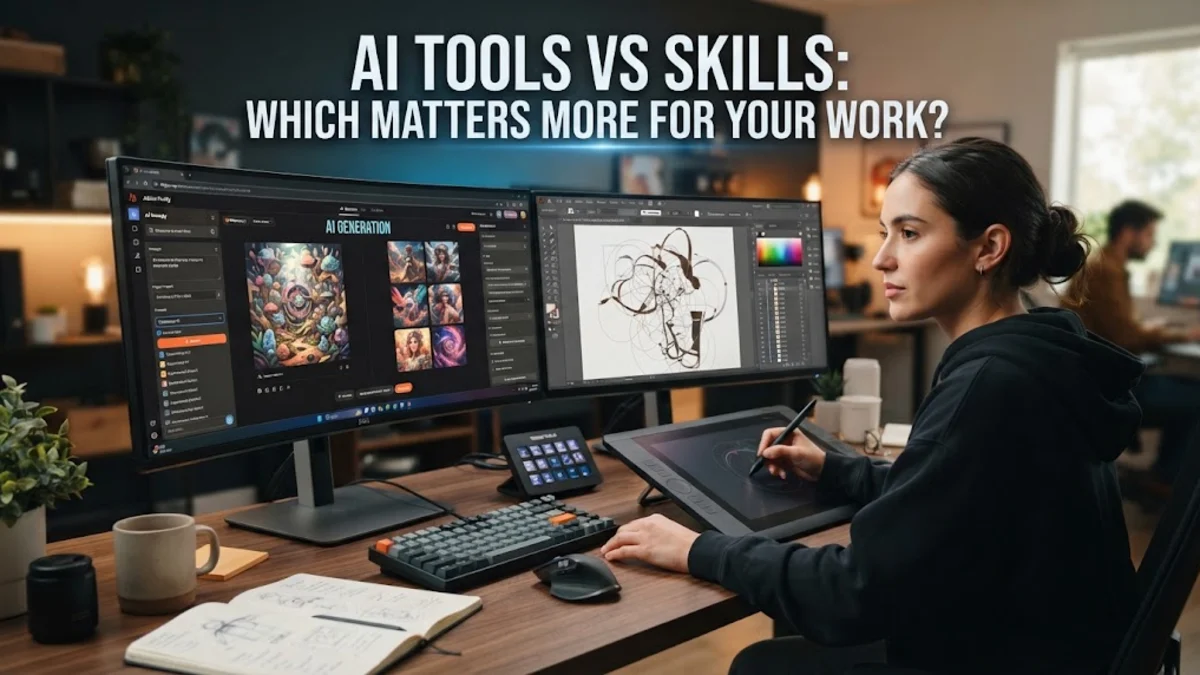
When evaluating professional growth, many workers debate whether mastering specific software applications or developing core human abilities drives better career outcomes. The rapid proliferation of artificial intelligence across industries has intensified this discussion, forcing professionals to reexamine what truly creates value in the modern workplace.
Understanding AI Tools in the Modern Workplace
Artificial intelligence applications have evolved rapidly from experimental novelties into indispensable components of daily business operations. Modern software solutions assist workers with text generation, complex data analysis, automated visual design, and routine task management. By handling repetitive administrative duties, these digital systems allow professionals to reallocate their time toward high-priority strategic objectives. However, treating these technologies as standalone solutions often leads to superficial or flawed outcomes. An application can process millions of data points within seconds, yet it fundamentally lacks the contextual awareness required to judge whether the underlying business assumptions align with broader organizational goals. Recognizing both the immense processing power and the inherent limitations of these systems is the first step toward building an effective productivity strategy. When workers understand how language models, predictive algorithms, and automated agents operate under the hood, they can better anticipate where software excels and where human intervention remains completely mandatory for success.
The Core Value of Enduring Human Skills
While software platforms and interface designs change continuously, foundational human capabilities remain remarkably stable and universally applicable across every industry. Critical thinking, emotional intelligence, complex problem-solving, negotiation, and cross-functional leadership form the bedrock of professional competence. These capabilities allow individuals to navigate ambiguous situations, mediate workplace conflicts, and inspire diverse teams toward shared strategic visions. Software cannot feel genuine empathy, nor can it understand the nuanced cultural dynamics involved in a high-stakes corporate negotiation. Cultivating these enduring personal competencies ensures that you remain professionally adaptable, capable of leading initiatives regardless of which specific technologies dominate the market. Furthermore, human judgment is required to evaluate ethical dilemmas, weigh moral implications, and make accountable decisions that impact real people. Investing in your own intellectual and emotional growth builds a resilient professional identity that no software upgrade can ever render obsolete.
How AI Tools and Skills Complement Each Other
Viewing productivity software and personal competencies as competing forces creates a false dichotomy that hinders career progression. In practice, the most successful professionals treat advanced technology as an amplifier of their existing expertise rather than a wholesale replacement for it. For instance, a skilled writer uses generative models to brainstorm alternative headlines, overcome writer's block, or check structural flow, but relies on their personal editorial judgment and voice to shape the final narrative. Similarly, a financial analyst uses machine learning scripts to quickly filter massive datasets, but applies deep domain knowledge to interpret anomalous patterns and advise stakeholders accurately. Combining deep human expertise with high-speed software yields output and strategic insights that neither human nor machine could achieve independently. This synergistic approach transforms technology from a potential threat to your job security into a powerful leverage point that multiplies your daily productivity and creative output.
Risks of Relying Solely on Software
Over-reliance on automation without developing underlying competencies introduces significant professional vulnerabilities and career risks. When workers depend entirely on applications to generate reports, write code, or draft marketing strategies without understanding the underlying principles, their output often becomes generic, uninspired, and prone to subtle errors. Furthermore, individuals who skip foundational learning struggle to evaluate whether an automated response is factually accurate, legally compliant, or safe to deploy in production. If technology systems experience unexpected downtime, API changes, or interface updates, entirely dependent users find themselves completely unable to complete basic tasks. This dependency creates a skills gap where workers atrophy their own analytical capabilities over time. Building robust personal knowledge acts as an essential safeguard, ensuring you maintain complete control over your work product and professional reputation regardless of external software reliability.
Cultivating Future-Proof Professional Capabilities
Developing a sustainable and resilient career requires a deliberate focus on competencies that resist automation while simultaneously embracing digital literacy as a supporting mechanism. Professionals should prioritize learning how to ask precise questions, evaluate source credibility, synthesize information from diverse academic disciplines, and communicate complex ideas clearly. At the same time, maintaining active familiarity with current productivity platforms ensures you can leverage efficiency gains whenever they become available. The ideal professional development plan combines rigorous study of industry fundamentals with hands-on experimentation with new software releases, ensuring you stay both knowledgeable and technologically agile. By adopting a mindset of continuous, lifelong learning, you position yourself to navigate market disruptions smoothly, turning technological shifts into opportunities for advancement rather than causes for professional anxiety.
Strategic Integration for Career Advancement
Integrating technology into your daily workflow effectively requires a systematic and disciplined approach to task management. Start by identifying repetitive bottlenecks in your routine where automation provides a genuine advantage, such as automated transcript summarization, meeting note organization, or initial formatting tasks. Use the time saved through these efficiencies to invest in deep work, creative strategizing, and interpersonal relationship building across your organization. Document your workflows to understand how your unique human perspective refines, corrects, and elevates the automated output. By maintaining strict ownership over the final product while utilizing software for the heavy lifting, you demonstrate high-level strategic capability that stands out clearly to employers, managers, and clients. This disciplined approach ensures that technology works for you, enhancing your professional value rather than diminishing your core skills.
The bottom line
Balancing technological proficiency with core human competencies is essential for long-term professional success in today's fast-paced environment. By mastering foundational skills and using software as an accelerator rather than a crutch, you position yourself to thrive in an evolving workplace.
Frequently asked questions
Are AI tools replacing the need to learn traditional professional skills?
No. While applications handle routine execution and data processing, traditional competencies like critical thinking, judgment, and emotional intelligence remain irreplaceable and necessary to guide technology effectively.
How can I balance learning new software with improving my core expertise?
Dedicate specific time blocks to studying industry fundamentals while treating software tutorials as practical extensions of those core concepts rather than standalone subjects.
What happens if I rely completely on automated applications for my work?
Complete reliance often results in generic output, difficulty spotting errors or hallucinations, and vulnerability when software systems fail, change interfaces, or experience downtime.
Which competencies should I prioritize developing alongside digital tools?
Prioritize critical thinking, active listening, complex problem-solving, ethical judgment, and domain-specific expertise that allows you to evaluate automated results accurately.