Why Is My iCloud Not Syncing and How to Fix It
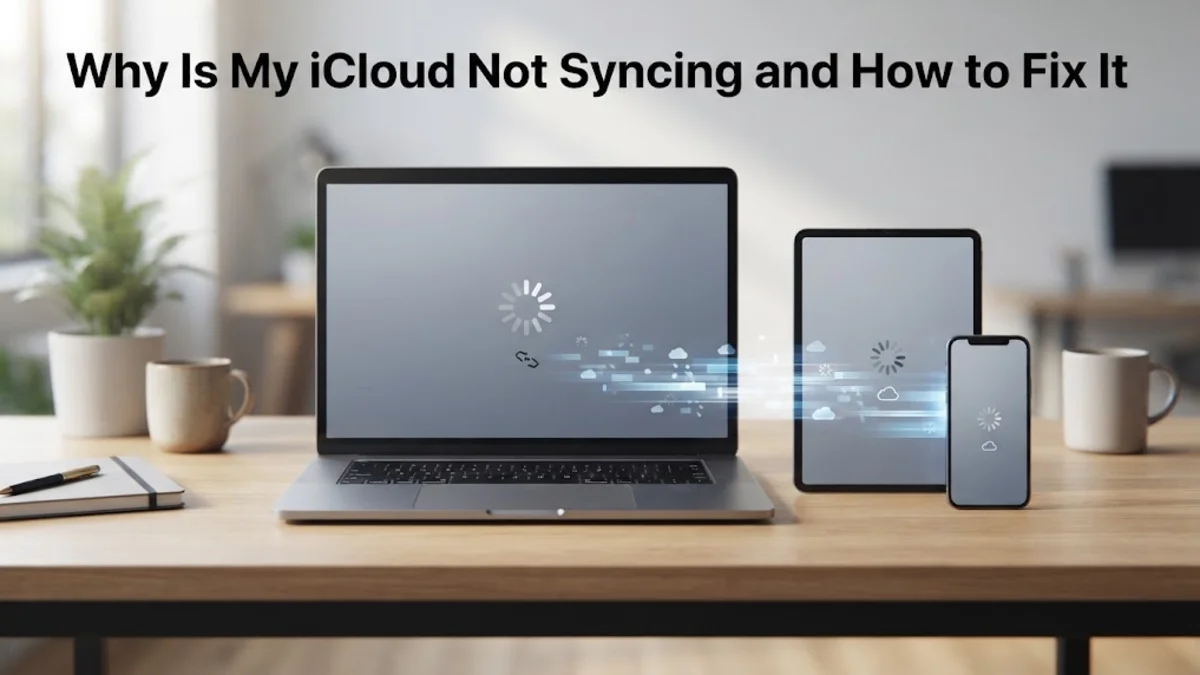
When your iCloud data fails to update across your iPhone, iPad, or Mac, it usually stems from a minor network glitch, an incorrect account setting, or insufficient storage space. Because iCloud relies heavily on a stable internet connection and accurate account credentials, even a momentary drop in connectivity can disrupt the background synchronization process.
Fixing this issue rarely requires advanced technical skills. By checking your network status, verifying app-specific permissions, and refreshing your Apple ID session, you can quickly restore normal synchronization and ensure your photos, notes, and documents are safely backed up.
Check Your Internet Connection and Cellular Data
The most common reason for sync failures is an unstable or restricted internet connection. iCloud requires an active Wi-Fi or cellular connection to upload and download data in the background. If your connection drops or if you have strict data limits enabled, syncing will pause automatically until a reliable network is detected.
To verify your connection, open a web browser on your device and load a page. If you are using cellular data for iCloud sync, go to Settings > Cellular and ensure that iCloud Drive and your specific apps are toggled on. If your Wi-Fi is unstable, try toggling Airplane mode on for ten seconds and turning it back off to reset your network radios.
Verify iCloud Settings for Specific Apps
Sometimes iCloud is working perfectly overall, but a single application has lost permission to sync. If you notice that only your Notes, Photos, or Safari bookmarks are not updating, you need to inspect the individual app toggles within your Apple ID account menu.
Open Settings > [Your Name] > iCloud and tap See All under the apps using iCloud section. Locate the specific app that is causing trouble and make sure the switch is enabled. If it is already turned on, try toggling it off and back on after a few seconds to force the system to re-establish a connection with the remote server.
Check Apple System Status and Server Outages
Before changing complex settings on your device, it is important to rule out a server-side problem on Apple's end. Apple occasionally takes parts of its cloud infrastructure offline for routine maintenance, or unexpected outages can disrupt global authentication and data synchronization services.
You can check the real-time operational status of all Apple services by visiting Apple's official System Status webpage. Look specifically for iCloud Account & Sign In, iCloud Drive, and Photos. If you see a yellow or red indicator next to these services, the sync failure is temporary, and you will need to wait until Apple resolves the issue on their servers.
Free Up iCloud Storage Space
Every Apple account comes with a limited amount of free cloud storage. If your storage quota is completely full, your devices will stop uploading new photos, backups, and documents until you free up space or upgrade your storage plan. When space runs low, synchronization quietly halts without always displaying an obvious warning banner.
To check your available storage, navigate to Settings > [Your Name] > iCloud > Manage Account Storage. Here, you can see exactly which files and applications are consuming your space. Delete unnecessary backups, large video files, or old attachments to bring your usage below your total limit, and syncing should resume shortly afterward.
Sign Out and Back Into Your Apple ID
Corrupted authorization tokens or temporary profile glitches can prevent your device from communicating securely with Apple servers. Signing out of your Apple ID and signing back in clears these corrupted cache files and forces a fresh authentication handshake with your account.
To do this, go to Settings > [Your Name], scroll to the bottom, and tap Sign Out. You will be prompted to enter your Apple ID password to disable Find My iPhone. Once signed out, restart your device and sign back in through the main settings menu. This action frequently clears stubborn synchronization blocks that basic toggles cannot fix.
Update Your Operating System and Restart
Running outdated software can introduce compatibility bugs between your local device framework and Apple cloud protocols. Apple regularly patches synchronization bugs in minor iOS updates, making it essential to keep your device operating system current.
Check for pending updates by going to Settings > General > Software Update. If an update is available, connect your device to a power source, connect to Wi-Fi, and install the latest version. After updating, perform a complete restart of your device to clear system memory and initialize the newly installed background sync daemons.
The bottom line
Resolving iCloud synchronization issues is usually a straightforward process of checking your network, verifying app permissions, and ensuring your storage is not full. By working through these troubleshooting steps systematically, you can eliminate sync errors and keep your important data seamlessly updated across all your devices.
Frequently asked questions
Why are my photos not showing up on other devices through iCloud?
This usually happens when iCloud Photos is disabled on one of the devices or when your device is connected to a metered cellular network that restricts background uploads. Check your photo settings under your Apple ID menu to ensure syncing is active.
Does low battery mode stop iCloud from syncing?
Yes. Low Power Mode temporarily pauses background activity, including mail fetch, automatic downloads, and iCloud photo uploads, to preserve battery life. Once your battery charges above eighty percent or you turn off Low Power Mode, syncing will resume.
Will signing out of my Apple ID delete my data?
When you sign out, your iPhone will ask if you want to keep a copy of your data on the device. As long as your data is already synced and saved in the cloud, signing back in will merge and restore your information safely.
How long does it take for iCloud to finish syncing after a fix?
For small changes like contacts or notes, syncing takes only a few seconds. However, if you are syncing thousands of high-resolution photos or large video libraries, the process can take several hours depending on your internet upload speed.
Can a poor Wi-Fi signal block iCloud sync?
Yes. Even if your Wi-Fi network connects to the internet, high packet loss or a weak signal can cause upload timeouts, forcing iCloud to pause synchronization until a stable connection is restored.